
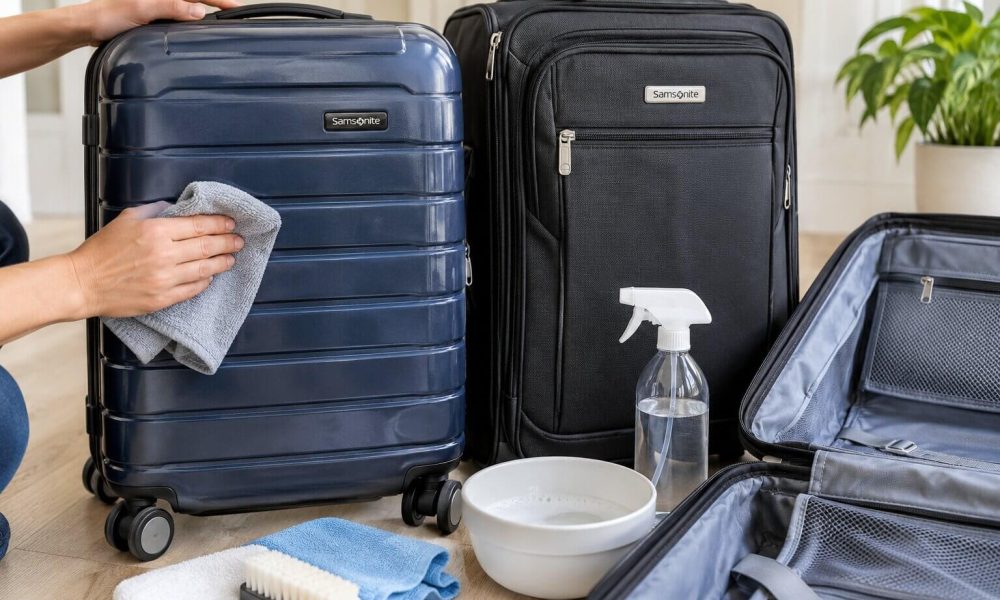

Most of the grime on a Samsonite case comes off with dish soap and about ten minutes.
- Hardside shell: damp cloth, mild dish soap, dry it right away.
- Scuffs: plastic polish, tried on a hidden spot first.
- Softside and backpacks: dab and spot clean, never soak.
- Lining: wipe it down, or wash a removable one at 30°C on a gentle cycle.
- Musty smell: diluted vinegar, then a full day of open air.
Knowing how to clean Samsonite luggage can make a tired suitcase look years younger. The grey, scuffed case that rolls off the baggage belt is usually just dirty, and dirt is the easy problem. Before you ditch it for a new one, give it a proper wash.
Samsonite’s own care advice is short and sensible: warm water, mild dish soap, and a soft cloth that is damp rather than wet. This guide keeps that advice and fills in the gaps, like black scuffs, set in stains and the closet smell that shows up after storage.
If the case is clean but still not right, our guides to replacing Samsonite wheels, fixing a stuck zipper and swapping a broken handle cover those jobs, and this look at what Samsonite will repair helps when the damage is more than dirt.
First, is your case hardside or softside?
Press the side of the case. If it barely gives, it is hardside, like the Omni and Winfield lines. If it gives like a gym bag, it is fabric. The two need different handling, because a trick that works on a plastic shell can fray fabric, and a fabric cleaner can streak plastic.
How to clean Samsonite luggage with a hardside shell
- Empty it and unzip every pocket. Toss out old luggage tags and receipts while you are at it. Cleaning around packed items just pushes dirt into the corners.
- Dust it with a dry microfiber cloth. Skip this and the grit on the shell gets dragged around like sandpaper.
- Wipe in small sections. A few drops of dish soap in warm water is plenty. Wring the cloth until it is damp, not wet, and use light pressure.
- Go over it again with plain water. Leftover soap dries into a dull film.
- Dry it straight away. A dry microfiber cloth beats air drying, which can leave streaks on a glossy shell.
Getting black scuffs and scratches off the shell
Most scuffs are marks left by other bags and baggage belts, not damage to the shell. A little non-abrasive plastic polish on a soft cloth, worked in with small circles, often lifts them. Try it on a hidden patch first, because finishes differ from one Samsonite line to the next. Stay away from alcohol and harsh solvents.
A melamine sponge, the kind sold as a magic eraser, also lifts many marks with water alone. It is a very fine abrasive, so use a light hand and stop if the finish starts to look dull. Even so, some damage stays. If a scratch catches your fingernail, no polish will remove it, so leave it be.
How to clean Samsonite luggage that is softside: dab, don’t scrub
Start with a handheld vacuum or a brush to pull loose dirt out of the seams and pockets. Then test your soap solution on a hidden spot, such as the underside, and wait for it to dry to check the color.
Work with a soft cloth or an old toothbrush and mild soapy water, using a dabbing motion. Scrubbing can wear the weave and leave a fuzzy patch. Wipe the soap off with a cloth dampened in plain water, then let the bag dry completely with every compartment open.
Wondering about the washing machine? Check the care label first. Backpacks with foam padding, a frame or a laptop sleeve are happier washed by hand, so treat the machine as a last resort and never use it on a hardside case.
Stains that have already set in
Blot a fresh spill right away instead of rubbing it in. For an older stain on fabric, use mild soapy water first. However, if it hangs on, a gentle upholstery or fabric stain remover on a cloth can help, after the same hidden spot test. Rinse the area, then air dry it.
Cleaning the inside of the case
To be on the safe side, check the care tag inside the case before you pull anything out. A fixed lining gets a damp cloth with a little mild soap, a second wipe with plain water, and a full day of air drying with the case open. Some lines, such as the Hi-Fi and Magnum, have a lining that unzips or unclips. That one can go in the machine on a delicate or handwash cycle at 30°C or below. Skip the tumble dryer.
Getting rid of a musty smell
Part of knowing how to clean Samsonite luggage is knowing when moisture is the real problem. A musty case almost always went into storage before it was fully dry. Wipe the interior with a cloth dampened in one part white vinegar to five parts water, then leave the case open in a ventilated room for a full day. For a stubborn smell, leave an open box of baking soda inside the closed case overnight.
Scented sprays only cover the smell. The moisture is still in there, and the odor comes back.
Handles, zipper pullers and wheels
These parts pick up more germs than the rest of the case put together, thanks to security lines and baggage claim. Disinfectant wipes are handy on handles, pullers and locks between trips. Keep them off the shell itself, since alcohol can dull the finish over time.
For dirty wheels, soapy water and a small brush clear the grime so the case rolls smoothly again. If a wheel wobbles or is cracked instead, no amount of cleaning will fix it, so see our guide to replacing the wheels.
Three cleaning supplies worth keeping in the closet
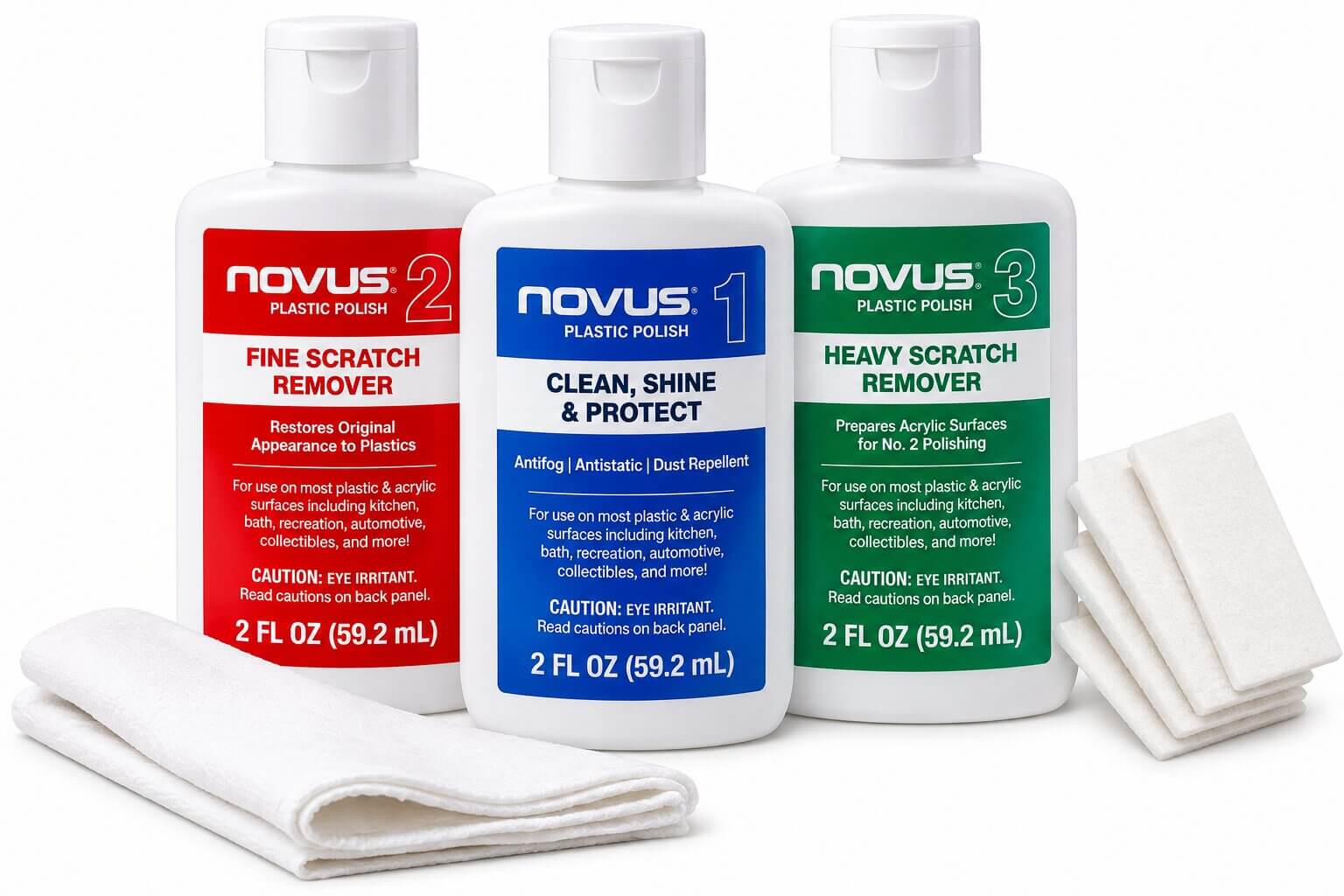
Novus 7136 Plastic Polish Kit
Made for plastic and acrylic, which makes it a close match for the polycarbonate shells on most hardside Samsonite cases. The kit has three steps: a cleaner, a fine scratch remover for light marks and a heavier compound for rougher ones. Try it on a hidden spot before you go near the front of the case.
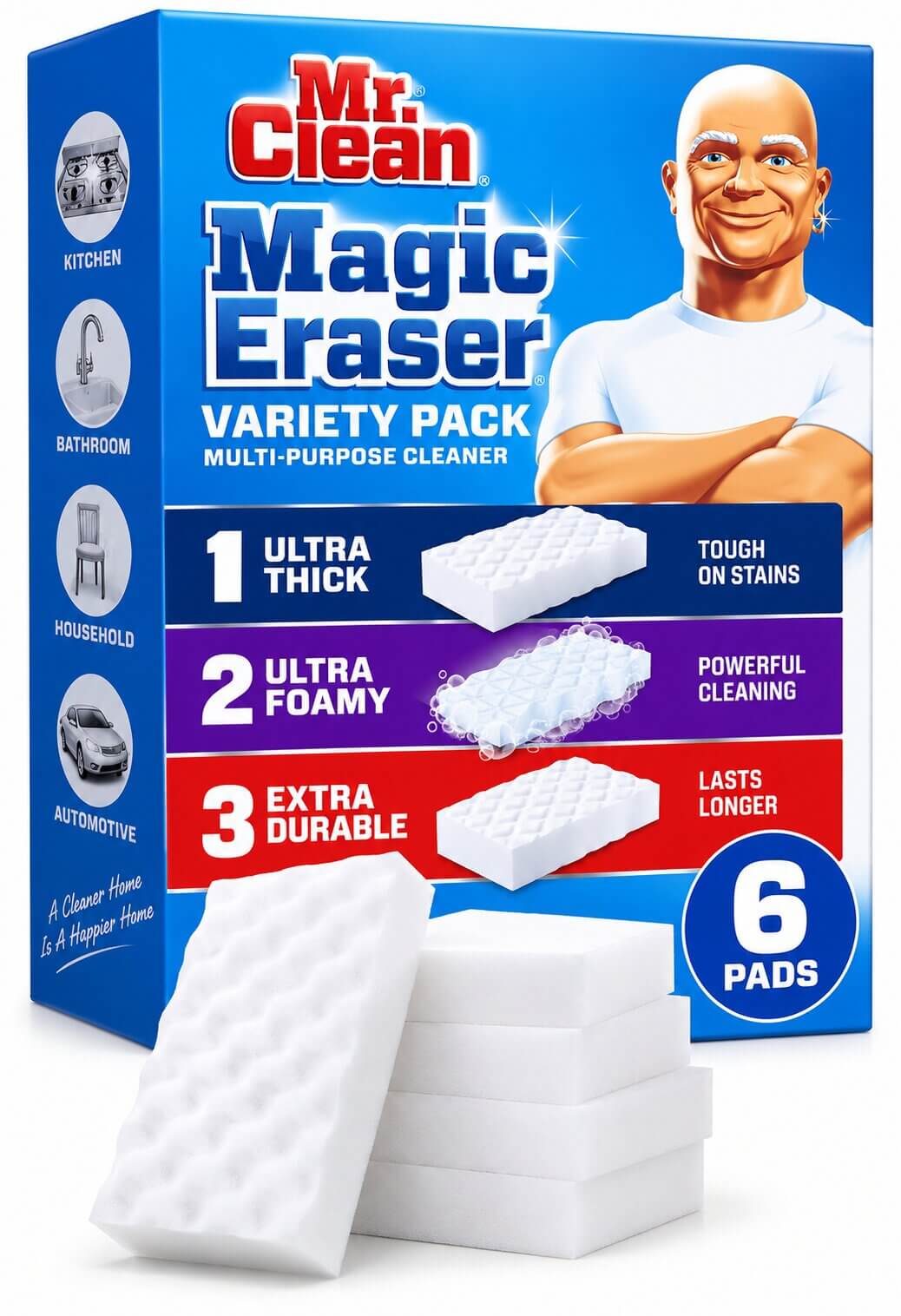
Mr. Clean Magic Eraser Variety Pack
Wet one, squeeze it out and rub a scuffed handle, shell edge or wheel housing. The mixed pack has thicker and tougher versions, so light marks and stubborn ones both get the right texture. Press lightly on glossy shells. Plus, it works just as well on scuffed shoe soles around the house.
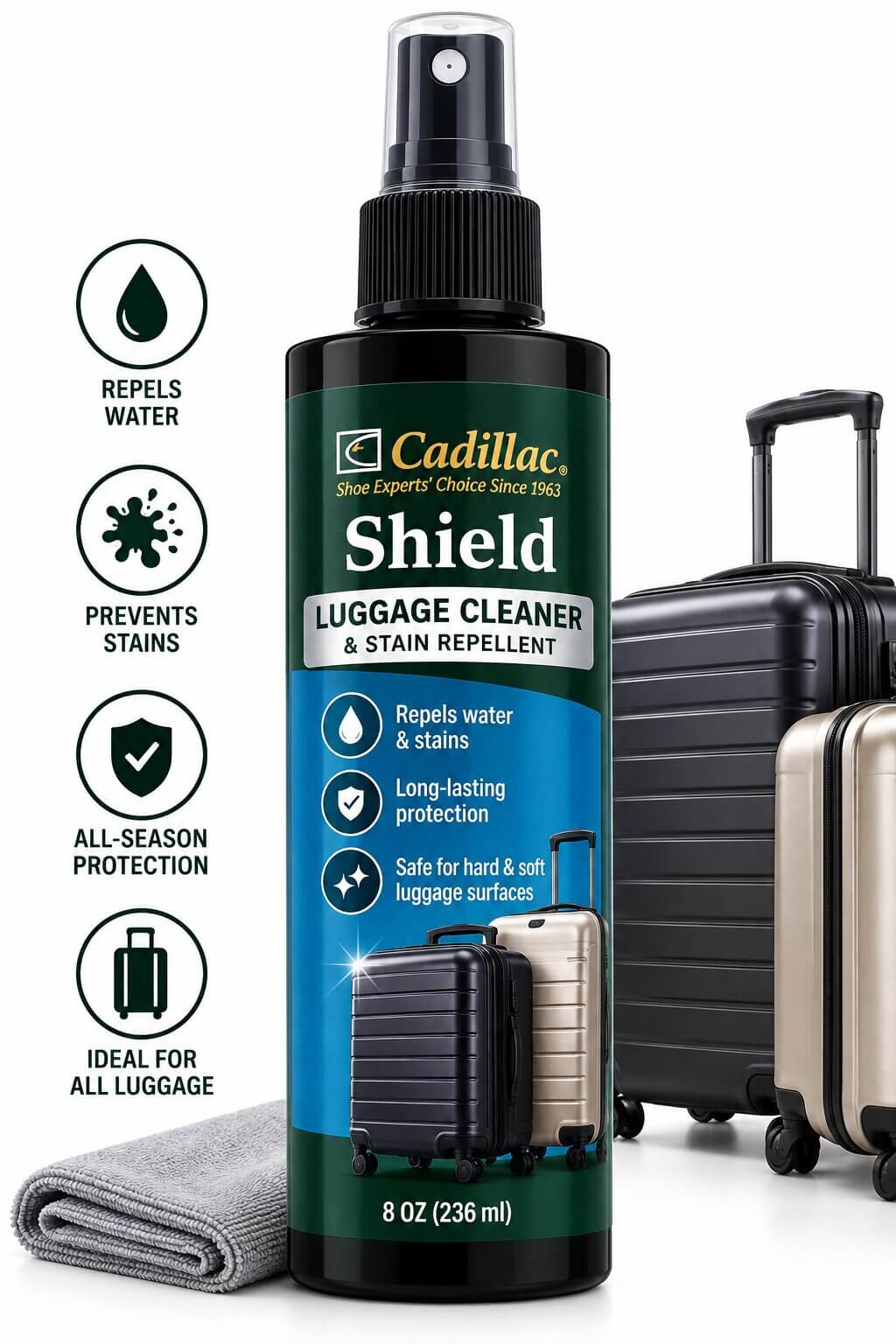
Cadillac Fabric Shield Water and Stain Protector
A clean softside bag stays that way longer with a repellent spray on it, since stains are far harder to lift from nylon than to prevent. Spray it after a deep clean, let it dry fully before you pack, and reapply after the next big wash. As a bonus, one can goes a long way if you have a few bags to treat.
New to Prime? Try Prime free for 30 days and get free shipping on cleaning supplies like these.
What to leave in the cupboard
- Alcohol or bleach on the shell. Both can cloud or discolor it.
- Hard scrub brushes on fabric. They leave a fuzzy patch for good.
- Soaking a case or bag. Water inside the seams is how the smell starts.
- The washing machine or dryer for any case. Only a removable lining qualifies, and only on a gentle cycle.
Storing a clean case so it stays that way
Once you know how to clean Samsonite luggage, keeping it clean is mostly about keeping it dry. Make sure the lining is bone dry, then store the case somewhere cool and dry. An attic, basement or garage swings between damp and hot, which is hard on both plastic and fabric. If a case sits for months, open it up now and then to let it breathe.
A clean case also makes it easier to see what is actually wrong with an older one. If you are weighing a replacement, our Omni 2 review shows what a newer hardside looks like.
Frequently asked questions
Can Samsonite bags be washed?
What is the best way to clean hard-shell luggage?
How to clean the inside lining of a suitcase?
How to get black scuff marks off luggage?
Why does my suitcase smell musty?

Samsonite Zipper Repair: Fix a Stuck, Broken, or Split Zipper